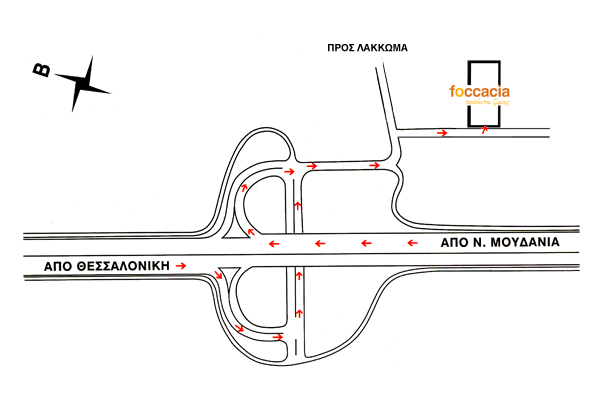
foccacia delivers at homes!
foccacia delivers at homes, too! Always at low wholesale prices!
Press here, or press the van ont he left column for more info.
History of Bougatsa – Etymology
The idea of making bougatsa, comes from the geographical region of Byzantium; more specifically, from Konstantinople, when the City was still Greek, before 1453 A.D. that is.
It is widely known that the Byzantines had a long tradition in the making of pies and desserts made in a pan. One form of these famous pies of the Byzantines is “Bougatsa”.
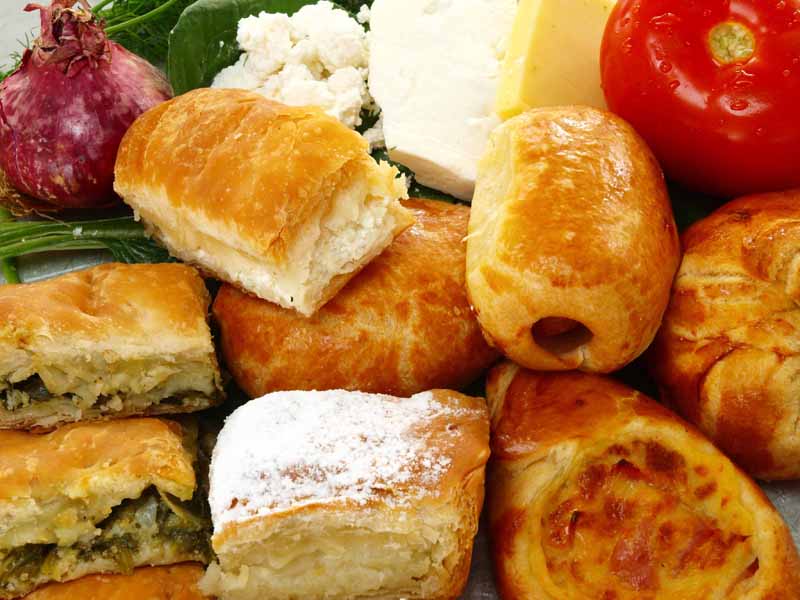
Even after the capture of the City by the Turks, bougatsa remained famous according to a traveler’s testimony during the 16th century. Traveler Evlia Tselebi reports that in Konstantinople, two bakeries made “bougatsa kourou”, “kigmali” (with burger), “peinirli” (with cheese), and “sante bougatsa” (sprinkled with powdeed sugar).
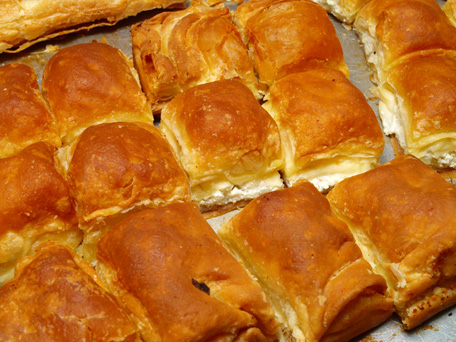
The residents of the City gave the name “bougatsa” or “bogatsa” meaning possibly “cheesy or sweet filling of pie, enclosed and sealed in the dough”. This is one of the many differences that bougatsa has from other pies. Another fundamental difference is that the phyllo dough is not spread with the assistance of the flour and the rolling pin, but only with the assistance of soft butter and oil.
In Konstantinople, this particular pie was called “pogatsa” or “bogatsa” by the Greeks, and “bugatsa” by the Turks.
However, today in Turkey, by the name bugatsa they call a number of different pies and other foods totally different from each other.
Ottoman dictionaries inform us that the word “pogatsa” is a linguistic corruption of the Latin word “foccacia” which means sweet pie. However, even if bougatsa borrowed its name from this Latin word, bougatsa was never limited to its sweet version. On the contrary, there has always been bougatsa with cheese, too.
Bougatsa became very popular in Greece after the Greek-Turkish war of 1922 and the population exchange that followed. It first came to Serres, because most immigrant Greeks established themselves there in the begining (my own great-grandfather, too!). Bougatsa then became popular in Thessaloniki as well, since Thessalonians found it to be a meal that would make them full before work or during their break. Bougatsa offered variety, since it was made with five different fillings, quality, and low price. Thus it’s featured as the food of the poor, since with little money someone could get full.
Byzantine linguistic influences in the kitchen
The Byzantine cultural influence took place in many aspects of everyday life of medieval Italians, especially in the kitchen lingo.
The Byzantines used to make a dessert made of honey syrup called “kiromelon”. The Italians called that “caramella” (caramel in English).
Also, since ancient times, the Greeks used to make somekind of long noodles that they would eat after a person’s funeral. The Byzantines, carried that tradition and they called these noodles “macaronia” (macarios+aionia = blessed+eternal). That’s how we have today’s macaroni. Of course later, the Italians created many kinds of spaghetti.
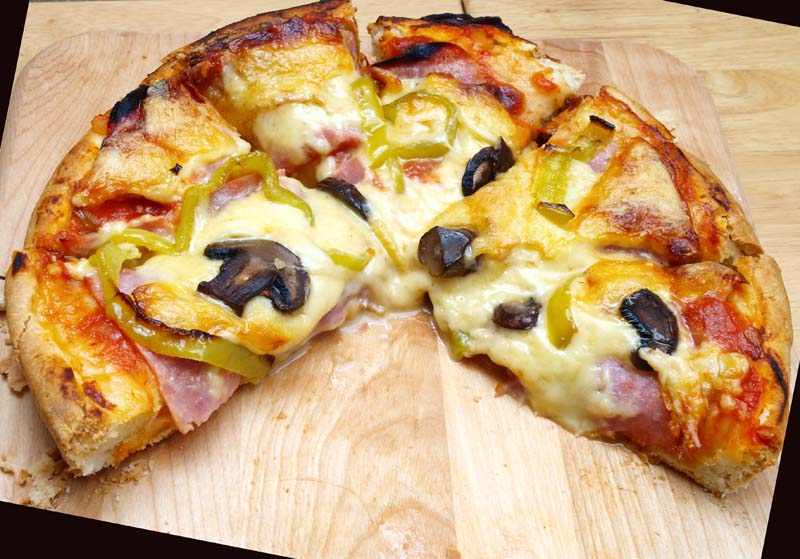
Finally, the Byzantines used to call different pies “placountes” (placentas), just like the ancient Greeks, or “pittes” and that’s how we get the word “pie”. In Byzantine Calabria, Greeks and Italians used to make a non-sweet “open” pie. Its basic ingredients were cheese, onions, olives and occasionally delicatessen meats. This food was the precursor of the very popular “pizza” which is a linguistic corruption of the word “pitta” (pie)!
foccacia presentation on YouTube
As of today, you can all watch an online presentation of our company’s profile that’s being hosted on youtube, by clicking here!
The 7 most popular Greek recipe websites
We conducted a small search and found for you the following sites that have recipes for very tasty Greek foods.
Enjoy!
Update
We’d like to let you know that in foccacia you can:
In addition, our products are the ideal solution for:
- Hotel breakfast

- Childrens’ parties, store opening parties, receptions

- Weddings, buffets, exhibitions
- Luncheonettes, coffee shops, patisseries
And remember:
You can always order for your home!*
Call us today at (+30)-23990-51640, leave your order and contact info, and we will rush to fill your order!
*: Only for residents of Thessaloniki, Mikra, Kallikrateia.
what is foccacia;
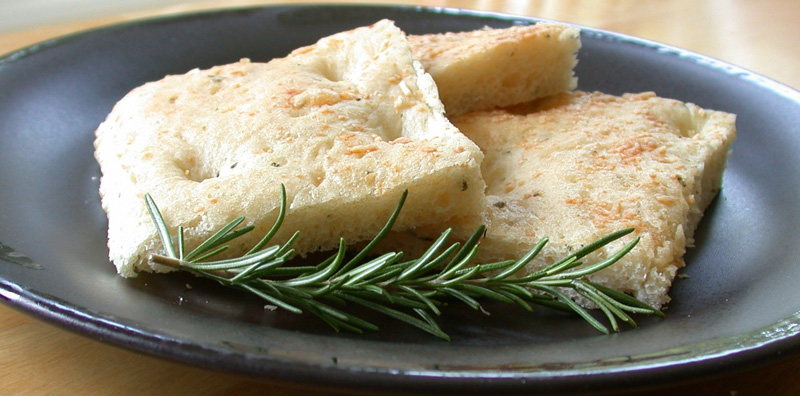
Focaccia is a flat oven-baked Italian bread which may be topped with herbs or other ingredients.
Focaccia is related to pizza, but not considered to be the same.
Foccacia is quite popular in Italy and is usually seasoned with olive oil and sometimes herbs, and may be topped with onion, cheese and meat, or flavored with a number of vegetables. However, by far the most typical focaccia is simply baked dough topped with olive oil and a simple herb like rosemary or sage
In ancient Rome, “panis focacius“ was a flat bread baked in the ashes of the fireplace. The word is derived from the Latin focus meaning “centre” and also “fireplace” – the fireplace being in the centre of the house
The basic recipe is thought, by some, to have originated with the Etruscans or ancient Greeks, but today it is widely associated with Ligurian cuisine.